
Beauty's Trust Problem: Are Brands Measuring the Wrong Things?
The beauty industry is rarely short of conversation. From emerging skincare ingredients and viral routines to product launches and influencer recommendations, social media continues to shape how consumers discover and engage with beauty brands. Yet social media visibility does not automatically translate into consumer trust or purchasing intent. Effective strategy requires an understanding of both online conversations and the consumer behaviours influencing purchasing decisions. This EMK insight article uses consumer and social media data and intelligence to explore how beauty brands can move from trend-led content towards more purposeful, evidence-informed social media strategies.
Data shows a more selective consumer landscape in 2026.
While awareness of emerging trends such as K-beauty and collagen continues to increase, 74.5% of consumers agree that they do not trust social media influencers to provide health and beauty advice, and 75.1% prefer to stick with products and practices they already know and trust.
At the same time, value for money (89.5%) and quality (88.3%) remain two of the strongest purchasing considerations. Despite the prominence of digital beauty content, 87.8% of UK health and beauty shoppers have purchased products in-store. Together, these findings highlight a disconnect worth examining. Social media may introduce consumers to products, trends and brands, but discovery alone does not establish credibility, communicate value or guarantee a purchase.
Beauty brands should ask themselves if their social media content is simply contributing to the conversation, or is it addressing the factors that actually influence their customers?
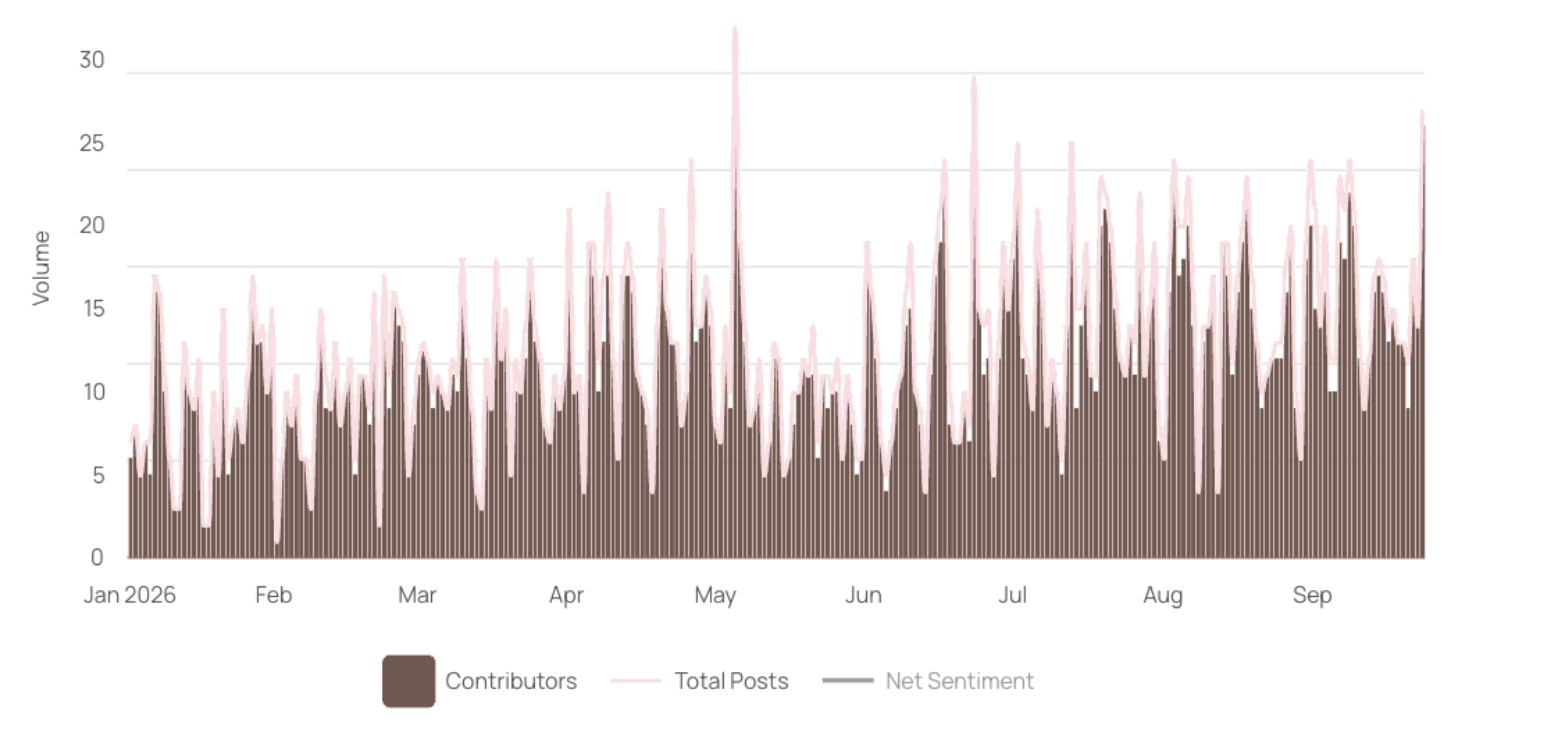
Trendline of total posts and contributors on social media surrounding health & beauty. From Jan 2026 - present.
Social media monitoring across the health and beauty sector shows ongoing posting activity, with fluctuations in both total posts and contributors throughout the reporting period. Several noticeable peaks appear from May onwards, illustrating how conversation volume can vary considerably over time.
So we can see when the conversation is taking place - but do consumers find that content useful, trust the information being shared or ultimately act on it?
Well, a global survey suggests that only 31.6% of consumers agree that they rely on social media to stay up to date with beauty trends, while 75.1% say they prefer to stick with products and practices they already know and trust.
And don’t confuse this as me saying social media is irrelevant to consumer behaviour in this industry, thats far from it. Instead, they challenge the assumption that more conversation necessarily creates more opportunity for every brand participating in it.
So ultimately what does that mean for social media strategy?
Monitoring conversation volume can be a useful starting point for identifying emerging topics and periods of heightened activity. However, the strategic value comes from investigating the context behind those movements.
Brands should consider who is contributing to the conversation, which topics are driving engagement and whether those discussions are relevant to their audience.
A sudden increase in discussion surrounding a beauty ingredient, for example, may indicate growing curiosity, an emerging concern or widespread debate. Each would require a different communication approach.
Without examining sentiment, audience relevance and the wider context, brands risk developing content around the visibility of a trend rather than its significance to their customers. The true opportunity lies in using social listening to inform content decisions, rather than treating popularity as sufficient justification for participation.
Trust Is Becoming a Critical Consideration in Beauty Communication
There is an important distinction between encountering beauty content and accepting the information it communicates, and from all the data I’ve analysed I’d say findings on consumers' attitudes towards influencer-led advice is especially notable.
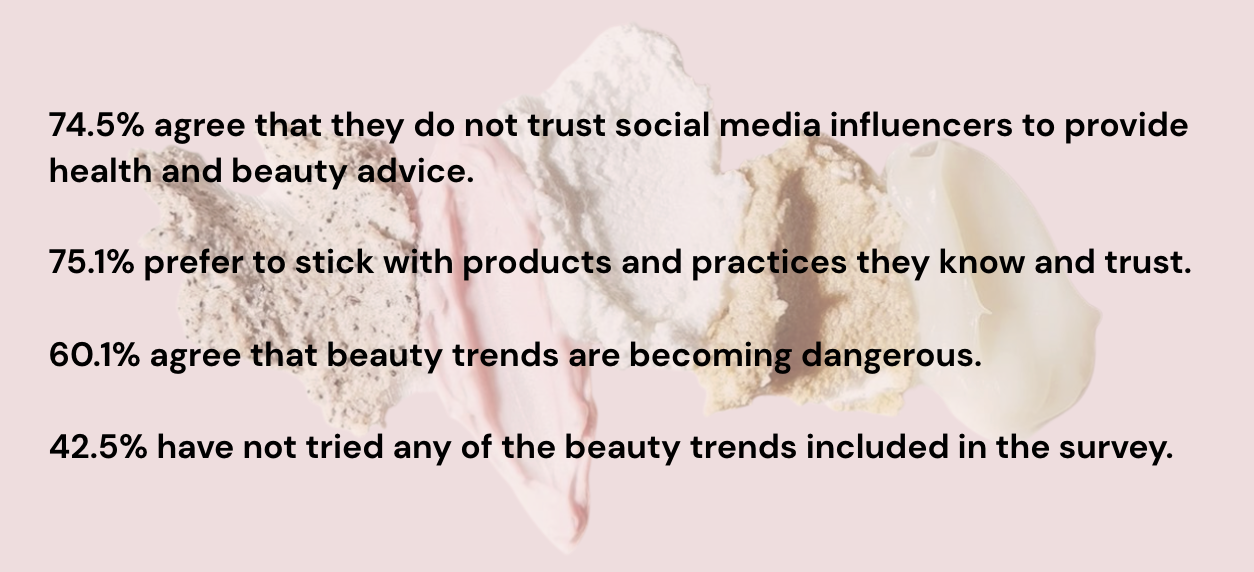
Examples that come to mind are Kendall Jenner's campaign with Anua and Tate McRae's with Neutrogena. Interestingly, I first came across both campaigns through other creators questioning the authenticity of the endorsements, particularly how convincingly the celebrities appeared to use the products they were promoting.

Influencer marketing can still play a valuable role in building brand awareness and introducing products to new audiences. However, the research suggests that brands should pay closer attention to the credibility of their messaging and the suitability of the people delivering it. Rather than assessing influencer partnerships primarily through audience size or potential reach, brands could place greater emphasis on creator relevance, transparency, subject knowledge and the quality of their audience relationships.
Content pillars are also key. Educational posts, transparent product information, demonstrations and clearly supported claims can provide consumers with additional context before they make a purchase decision. Credibility should not be treated as an additional content theme. It should be considered throughout the way a brand communicates.
This does not mean every beauty brand should adopt the same educational approach. A clinically positioned skincare brand and a colour cosmetics brand may have very different communication priorities.
The objective is to understand what reassurance a particular audience needs and how social media can communicate that information effectively.
Consumers Are Looking for Value, but Are Brands Communicating It?
Value for money (89.5%), quality (88.3%) and price (87.0%) are identified as the three leading purchasing drivers in the UK health and beauty market. Findings suggest that consumers' understanding of value extends beyond the lowest available price - ingredient quality, product longevity and confidence in what they are purchasing can all contribute to the value consumers perceive.
Further research into what consumers consider good value for money reveals:
52.6% identify low prices.
47.5% identify high-quality ingredients.
45.4% value prices that accurately reflect quality.
34.0% consider good loyalty schemes important.
27.4% associate value with long-lasting products.
This presents an interesting consideration for social media, where product communication often competes for attention through visual appeal, launches, trends and promotional messaging.
A product might be positioned around premium ingredients or long-term performance, but if those qualities are not clearly communicated, consumers may struggle to understand its differentiation.
For brands, the question is not simply whether their products offer value, but whether that value is visible within their content.
Social media provides opportunities to explain product attributes, demonstrate applications, communicate formulation decisions and help audiences distinguish between alternatives.
A premium skincare brand, for example, may benefit from content explaining what differentiates its formulation and how the product is intended to be used.
A more accessible beauty brand might focus on versatility, ease of use or how products fit into everyday routines.
The most appropriate approach depends on the brand's position, product strengths and audience expectations.
Importantly, brands should also assess the balance of their existing content. If a significant proportion of communication is focused on product imagery and promotions, is there sufficient explanation of the benefits consumers are being asked to pay for?
Understanding how an audience defines value can provide direction for content pillars, messaging and brand storytelling.
The customer journey extends beyond the screen
Despite the significant role digital channels play in beauty discovery and communication, physical retail remains central to purchasing behaviour.
87.8% of UK health and beauty shoppers purchased products in-store.
44.6% purchased products online.
73.7% agree that they prefer browsing health and beauty products in-store.
67.9% used mobile devices for health and beauty shopping-related activity, rising to 82.2% among those aged 16–24.
These figures reinforce the importance of examining different stages of the consumer journey rather than viewing physical and digital retail as separate experiences.
For brands with physical retail distribution, the role of social media should not necessarily be restricted to generating online sales. If a brand only evaluates social media through direct online conversions, it may overlook other meaningful contributions, particularly where digital discovery and physical purchasing are connected.
Brands should therefore consider how social media fits within their wider customer journey and which outcomes are appropriate to measure at each stage.
A strategy designed to improve awareness and product consideration will require different content and success indicators from one focused primarily on immediate online conversions.
The key is ensuring that social media objectives reflect the way customers actually discover, evaluate and purchase products.
Emerging Trends Need More Than Visibility to Become Relevant
The beauty market continues to demonstrate interest in emerging ingredients, products and routines, but awareness and participation tell different stories.
Data shows that K-beauty awareness increased by 7.9 percentage points to 19.0% in 2026.
Collagen recorded the highest awareness among the listed beauty trends at 40.3%, with 18.1% of surveyed shoppers reporting having tried it.
Yet 42.5% of consumers had not tried any of the listed trends, an increase of 2.3 percentage points from the previous year.
The figures highlight the importance of differentiating between a topic gaining attention and consumers actively adopting it. Although awareness can be an early indication of interest, it should not be interpreted as an equivalent level of demand - trends may be widely discussed without being relevant to the brand's existing customers, product offer or positioning.
Trend monitoring should form part of social media research, but participation should be selective.
Before incorporating a trend into a content strategy, brands should consider its relationship to their audience, the credibility of the surrounding conversation and whether it aligns with their existing brand identity.
It is also worth examining how awareness develops over time. Is the topic continuing to grow? Are consumers asking more detailed questions? Is discussion becoming more positive or more critical?
Combining social listening with consumer research and a brand's own performance data can help identify which opportunities warrant further exploration.
Consumer Expectations Are Not Always Reflected in Purchasing Behaviour
60.5% of health and beauty shoppers consider product sustainability an important purchasing driver, while 72.6% of respondents agree that they would purchase more sustainable or environmentally friendly products if they were cheaper.
However, only 43.6% report regularly purchasing sustainable health and beauty brands.
Secondhand beauty also demonstrates a gap between potential interest and participation.
Just 6.3% of health and beauty shoppers reported purchasing secondhand products, while 79.4% agreed that they would avoid secondhand beauty items because of concerns about quality or hygiene.
Among consumers who do shop secondhand, saving money or finding a bargain is the leading motivation at 46.6%, compared with 25.1% who identify sustainability.
These findings suggest that positive attitudes towards an idea do not necessarily translate into purchasing behaviour when practical concerns remain unresolved. Brands communicating sustainability initiatives should consider whether their content addresses the barriers that may prevent consumers from participating. While environmental benefits may be meaningful, customers may also need information about affordability, hygiene, quality, product safety or convenience.

The UK health and beauty landscape continues to evolve, with emerging trends attracting attention alongside established consumer priorities such as value, quality and trust. Throughout this research, it’s clear that one finding remains particularly relevant: what attracts consumer attention is not necessarily what influences purchasing decisions.
Social media offers beauty brands extensive opportunities for discovery, visibility and engagement. However, the findings suggest that familiarity, trust, product quality and perceived value remain important considerations for consumers navigating an increasingly crowded market.
This raises a question for brands: how much of your social media strategy is informed by what their audience actually values, rather than what is currently performing well online?
A trending ingredient might generate thousands of conversations, but that does not necessarily mean a brand should immediately incorporate it into its content. Equally, a beautifully produced campaign might attract attention without adequately communicating why a product is worth purchasing - neither are inherently unsuccessful. Its effectiveness depends on what the brand intended to achieve and their specific goals. A campaign designed to increase brand awareness, for example, may be successful in generating reach, attracting new audiences and increasing brand recognition, even if it does not immediately result in purchases. Conversely, a campaign intended to drive conversions might generate comparatively little engagement but still perform effectively if it reaches the right consumers and encourages meaningful purchasing action.
It’s all about understanding the relationship between consumer needs, brand positioning and the purpose behind each piece of content.
So What Should Brands Be Considering?
I’m glad you asked! If consumers are placing significant importance on product quality, value and credibility, brands should examine how consistently these qualities are communicated. And this doesn’t mean completely changing your visual style, if you post lots of creative, fun content then changing to traditional, purely educational content isn’t going to feel natural - it’s finding ways to address the information, interests and motivations of your target audience in a way that seamlessly works.
Understanding the barriers behind consumer behaviour:
It’s important to remember that consumer interest does not always translate into purchasing behaviour. Understanding why an audience hesitates can be just as valuable as understanding what attracts them. Product concerns, price perceptions, limited information or uncertainty about suitability may each require a different communication approach, and understanding this is just as valuable.
Evaluating trends within the context of the brand
Not every emerging beauty trend presents a meaningful opportunity for every business.
Before pursuing a trend, brands should consider whether it aligns with their positioning, products and customers. Social listening can help identify developments worth monitoring, while audience insights and performance data provide additional context for deciding whether to act.
Looking beyond engagement as a measure of success
Reach, views and engagement can provide useful information, but their significance depends on the brands specific objectives.
If you’re seeking to build consumer confidence, indicators such as relevant enquiries, website behaviour, product consideration and conversions may offer additional insight. Don’t dismiss engagement metrics, instead try to understand what they contribute to the wider marketing picture.
One Market, Different Strategies
Perhaps the most important consideration is that these findings will not apply equally to every beauty brand.
An emerging skincare company may need to establish credibility and educate consumers about its formulations. A more established cosmetics brand might already have strong product awareness but need to communicate differentiation within a competitive market.
For a retailer, the priority could be connecting digital discovery with the in-store experience.
Each situation calls for a different approach. Industry research can reveal wider consumer patterns, but those patterns need to be assessed alongside a brand's own audience, competitive environment, positioning and existing social media performance.
There is rarely a single finding that determines what a brand should do next. Value comes from bringing different sources of information together, identifying relevant opportunities and testing how those insights translate into practice.
The UK beauty market will continue to evolve, with new trends, products and conversations competing for consumer attention. Ultimately, effective social media strategy is not simply about understanding what is happening online. It is about understanding why it matters to the brand, its audience and its wider objectives.